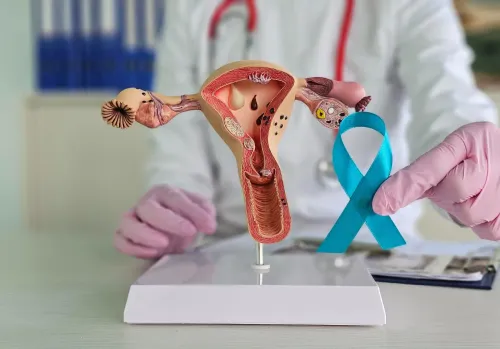
One late period rarely identifies the cause, but repeated long cycles, skipped periods, new excess hair, acne, or scalp-hair thinning deserve more than guesswork. You will be able to compare your cycle pattern with clinical thresholds, recognise symptoms that need prompt care, and prepare for a focused PCOS evaluation.
Key takeaways
- Repeated irregular cycles with acne, facial hair, or hair thinning deserve evaluation.
- PCOS symptoms overlap with thyroid disease, pregnancy, stress, and other hormonal causes.
- A PCOS work-up may include pregnancy testing, hormone tests, and pelvic ultrasound.
- Seek urgent care for heavy bleeding, faintness, severe pain, or possible pregnancy complications.
Which period patterns deserve a PCOS evaluation?
Yes—seek a PCOS evaluation instead of waiting for another period when irregular periods follow a repeated pattern, especially with PCOS symptoms such as new facial hair, persistent acne, or scalp hair thinning. One late period after illness, travel, major stress, or a weight change is different from a cycle pattern that keeps returning.
| Pattern | What it means | What to do |
|---|---|---|
| Cycles longer than 35 days | Ovulation is happening less often than expected | Book a non-urgent assessment if this repeats |
| Fewer than eight periods a year | Your total cycle frequency is below the adult threshold | Arrange an evaluation rather than tracking indefinitely |
| Any gap longer than 90 days | Ovulation may have stopped for that interval | Contact a clinician, even if bleeding eventually returns |
| Bleeding lasting more than seven days | The duration is outside the usual menstrual range | Request assessment, particularly if this keeps happening |
| Cycles shorter than 21 days | Bleeding is arriving unusually frequently | Arrange an evaluation to identify the cause |
These thresholds warrant assessment; they do not prove PCOS. PCOS involves separate features—irregular ovulation, higher androgen activity, and polycystic-appearing ovaries—and you do not need all three. Even apparently regular cycles can involve inconsistent ovulation, so persistent androgen-related symptoms deserve review. Take a pregnancy test before assuming a missed period is hormonal.
How can you tell PCOS-related changes from other causes?
An occasional late period does not identify PCOS. PCOS versus pregnancy starts with a pregnancy test, because early pregnancy can cause a missed period, spotting, breast tenderness, nausea, and fatigue. Persistent cycles longer than 35 days or repeated missed periods point toward ovulatory dysfunction, but symptoms alone cannot confirm the cause.
Other explanations include:
- Thyroid disease, which can cause irregular bleeding, tiredness, temperature sensitivity, constipation, weight change, or palpitations.
- High prolactin, which can cause missed periods, breast milk discharge unrelated to breastfeeding, headaches, or vision changes.
- Medication effects from hormonal contraception, antipsychotics, steroids, or some other prescribed treatments.
- Perimenopause symptoms, including changing cycle length, hot flushes, night sweats, sleep disruption, and mood changes; this becomes more relevant with increasing age.
- Major weight loss or gain, restrictive eating, intense exercise, chronic illness, or significant stress, each of which can suppress ovulation.
A clinician may also exclude non-classic congenital adrenal hyperplasia and other ovarian or adrenal disorders. Seek prompt assessment for sudden symptoms, rapidly increasing facial or body hair, deepening voice, increased muscle mass, or markedly high androgen levels; these findings require evaluation beyond PCOS. Acne or unwanted hair alone does not distinguish PCOS from other causes.
A pelvic ultrasound can support assessment, but a scan alone does not diagnose PCOS.
What should a PCOS consultation and work-up include?
A useful PCOS consultation starts with your cycle pattern, not an ultrasound image. The clinician will ask when periods began, cycle lengths, bleeding duration, skipped months, pregnancy possibility, acne, facial hair, scalp thinning, nipple discharge, headaches, vision changes, weight shifts, exercise, eating patterns, medicines, and family history.
They will also ask whether you want pregnancy now.
- The examination includes blood pressure, weight, body-mass index, waist measurement, thyroid examination, and signs of androgen excess such as hirsutism, acne, or scalp hair loss. Galactorrhoea, or unexpected breast discharge, points toward checking prolactin.
- A pregnancy test comes before treatment for absent periods or ovulation problems.
- A TSH test checks thyroid disease, while a prolactin test checks hyperprolactinaemia. The clinician may add total and free testosterone, DHEAS, and a 17-hydroxyprogesterone test to assess androgen excess and non-classic congenital adrenal hyperplasia.
- Glucose assessment matters even without excess weight. A 75-g oral glucose tolerance test gives the most accurate assessment; HbA1c or fasting glucose does not always replace it. A lipid profile and blood-pressure review assess cardiometabolic risk.
- Pelvic ultrasound can assess ovarian appearance and the uterine lining, but polycystic-appearing ovaries alone do not establish PCOS.
Markedly high androgen levels, rapid virilisation, or sudden symptoms require investigation beyond PCOS. When booking a PCOS doctor in Vile Parle, ask whether Dr Karishma Shirgaonkar Shah will review the full history, examination, and test results rather than relying on one scan.
Related service
Menstrual Problems encompass a range of symptoms and conditions related to the menstrual cycle, which can significantly impact a woman's quality of life. View service → |
Why do long gaps between periods matter beyond fertility?
Months without ovulation leave the endometrium exposed to oestrogen without the regular progesterone withdrawal that follows ovulation. The lining can become excessively thick, causing endometrial hyperplasia and increasing the long-term risk of endometrial cancer.
This does not mean every person with PCOS needs routine ultrasound or biopsy; without additional indications, prevention focuses on regular bleeding or appropriate progestogen exposure.
PCOS also carries cardiometabolic risk, including in people who are not overweight. Useful monitoring includes:
- Blood pressure at least once a year
- Glucose assessment when PCOS is diagnosed
- A 75-g oral glucose tolerance test when the most accurate assessment is needed, particularly before pregnancy
A normal fasting glucose or HbA1c does not always replace an oral glucose tolerance test. Routine insulin blood tests are not recommended because available assays have limited clinical usefulness.
Treatment depends on your goal. If you are not trying to conceive, a combined oral contraceptive can regulate bleeding and help hirsutism; cyclic progesterone is another way to protect the endometrium when appropriate.
The role of metformin for PCOS is mainly metabolic, such as insulin resistance or higher diabetes risk, rather than treating every irregular period. If pregnancy is the goal, letrozole is the recommended first-line ovulation-induction medicine for PCOS-related anovulatory infertility after pregnancy testing and assessment for other fertility factors.
When is irregular bleeding urgent, and what if you want pregnancy?
Urgent care is needed for heavy menstrual bleeding that soaks a pad or tampon every hour for more than two hours, especially with dizziness, shortness of breath, or chest pain. Severe one-sided pelvic pain, fainting, shoulder pain, or bleeding after a positive pregnancy test also needs immediate assessment because ectopic pregnancy must be excluded.
| Situation | What to do | Why it matters |
|---|---|---|
| Trying to conceive | Take a pregnancy test, review medicines, check blood pressure and glucose, and discuss folate, sleep apnoea, and mental-health concerns. Use an oral glucose tolerance test when precise assessment is needed; fasting glucose or HbA1c does not replace it. | PCOS increases pregnancy risks, including gestational diabetes, high blood pressure, and miscarriage. |
| Difficulty conceiving | Assess ovulation and consider semen analysis and tubal-patency testing when indicated. For anovulatory PCOS infertility with no other factor, ask about letrozole ovulation induction as first-line medication. | Treating ovulation alone will not correct blocked tubes or a male-factor cause. |
| Positive pregnancy test | Arrange early prenatal care and monitoring for blood pressure, glucose, and pregnancy complications. Do not stop prescribed medicine without advice. | PCOS-related risks continue after conception. |
Seek urgent assessment rather than waiting for a routine appointment if bleeding leaves you weak or breathless, pain is sudden or one-sided, or pregnancy is possible.
Frequently asked questions
Which period patterns deserve a PCOS evaluation?
Repeatedly late, widely spaced, or missed periods deserve evaluation, especially when they occur with new facial hair, persistent acne, or scalp hair thinning. One delayed period after illness, travel, major stress, or a weight change is less suggestive of PCOS.
How can you tell PCOS-related changes from other causes?
PCOS symptoms overlap with pregnancy, thyroid disease, high prolactin, major stress, weight changes, medication effects, and other hormonal conditions. A clinician uses your cycle history, symptoms, examination, pregnancy testing, blood tests, and sometimes pelvic ultrasound to distinguish them.
What should a PCOS consultation and work-up include?
Expect questions about cycle dates, bleeding, acne, hair growth, hair loss, weight changes, medicines, and pregnancy plans. The work-up may include a pregnancy test, thyroid-stimulating hormone, prolactin, androgen tests, glucose or HbA1c testing, lipid testing, and pelvic ultrasound when indicated.
Why do long gaps between periods matter beyond fertility?
Long gaps can mean the uterine lining is exposed to oestrogen without regular progesterone. Over time, this can cause unpredictable heavy bleeding and requires medical assessment to protect the lining, even when pregnancy is not a current goal.
When is irregular bleeding urgent, and what if you want pregnancy?
Seek urgent care for very heavy bleeding, faintness, shortness of breath, severe pelvic pain, or bleeding during a possible pregnancy. If you want pregnancy, tell the doctor early so evaluation can address ovulation, metabolic health, medications, and safe treatment options.