
A first visit can cover anything from a late period or painful cramps to pregnancy planning, urgent symptoms or long-term preventive care. You will finish with a clearer idea of which records and tests to bring, when to seek emergency help, and how to choose ongoing obstetric and gynaecological care in Vile Parle.
Key takeaways
- Bring your last period date, cycle details, medical history and current medicines.
- Pregnancy care includes scheduled reviews, screening, birth planning and postpartum recovery support.
- Choose contraception based on effectiveness, reversibility, health conditions and future pregnancy plans.
- Preventive checks change with age, symptoms, sexual activity, pregnancy plans and reproductive stage.
What Happens at Your First Obstetrician-Gynaecologist Appointment?
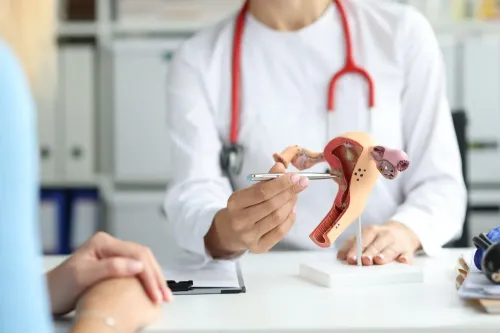
At your first gynaecologist appointment, bring the date of your last menstrual period, cycle length, pregnancy history, previous operations, allergies, medicines and contraception details. Track each period from the first day of bleeding: record cycle length, flow, spotting, pain and symptoms such as acne, headaches or mood changes.
Routine preventive visits review health, screening and contraception. Problem-focused visits investigate symptoms such as irregular, absent, painful or heavy periods. A consent-based examination may include abdominal examination, external examination or a speculum and pelvic examination; you can ask questions, request a chaperone and pause or refuse.
| Routine visit | Prevention and screening | No urgent symptom |
|---|---|---|
| Problem-focused visit | Targeted examination and tests | Pain, abnormal bleeding or missed periods |
A urine pregnancy test helps after a missed period; an early negative test may need repeating, or a blood test. Thyroid-stimulating hormone and prolactin assess hormonal causes; a complete blood count checks anaemia. Pelvic ultrasound can find fibroids, polyps or adenomyosis, but a normal scan does not exclude endometriosis.
Follow-up should state which results are pending, treatment steps and the review date.
Common causes include pregnancy, thyroid disease, hyperprolactinaemia, polycystic ovary syndrome, fibroids, endometriosis, adenomyosis, undernutrition and excessive exercise. Seek prompt care for soaking a pad hourly, bleeding over seven days, fainting, severe or worsening pain, bleeding between periods or pain during sex.
For adolescents, ask about private time, consent, period education, acne, excess hair, eating, exercise and sexual health. An adult or clinician must help with fainting, severe pain, very heavy bleeding, suspected pregnancy, abuse or self-harm.
How Should Pregnancy Care Progress From the First Visit to Recovery?
Book your first visit after a positive home test or suspected pregnancy. If the test was taken before the missed period and is negative, repeat it after several days if bleeding has not started; early urine tests can miss rising hCG.
Bleeding is not a menstrual period during pregnancy: it can signal miscarriage, ectopic pregnancy, cervical problems or placental complications.
The trimester pregnancy schedule includes:
- First trimester: review medicines, medical conditions and pregnancy history; arrange blood group, complete blood count, urine, infection and other indicated blood tests, plus a dating ultrasound when dates are uncertain, pain or bleeding occurs, or risks require it.
- Second trimester: attend routine antenatal reviews with blood-pressure checks; schedule the anomaly scan around 18–22 weeks and the gestational diabetes test at 24–28 weeks, or earlier with substantial risk factors.
- Third trimester: continue reviews, discuss birth preferences and warning signs, and plan transport, hospital admission and newborn care.
Seek urgent care for heavy bleeding, one-sided pain, shoulder pain, dizziness or fainting, severe abdominal pain, leaking fluid, severe headache with visual changes, reduced fetal movement, chest pain or breathlessness.
| Option | Common reasons | Recovery demands |
|---|---|---|
| Vaginal birth | Spontaneous labour | Perineal soreness; gradual recovery |
| Forceps or vacuum | Prolonged labour or fetal concern | Vaginal recovery plus possible tears |
| Caesarean birth | Placenta previa, distress or obstructed labour | Abdominal wound care and slower recovery |
Keep identification, reports, medicines, preferences, support-person details, transport and newborn supplies ready. After birth, arrange care for bleeding, wound healing, breastfeeding, contraception before the first period, mood, pelvic-floor recovery and blood pressure; attend the six-week review.
Seek urgent help for heavy bleeding, fever, severe headache or visual changes, chest pain, breathlessness, unilateral leg swelling or self-harm thoughts.
What Are Your Options for Contraception, Pregnancy Planning and Fertility Care?
Condoms are the only listed method that also reduces sexually transmitted infection (STI) transmission; use one every time, even with another method.
| Option | Effectiveness and reversibility | Side effects and appointment |
|---|---|---|
| Condoms | 85% typical-use; immediate return | Latex irritation or breakage; no appointment |
| Combined or progestogen-only pills | 93% typical-use; quickly reversible | Bleeding changes, nausea; prescription and suitability review |
| Copper or hormonal IUD | Over 99%; reversible after removal | Cramps or bleeding changes; clinician insertion |
| Implant | Over 99%; reversible | Irregular bleeding; clinician insertion and removal |
| Injection | 96% typical-use; reversible, with delayed fertility return | Bleeding or weight changes; repeat injections |
| Permanent contraception | Over 99%; intended to be irreversible | Procedure and informed consent; no STI protection |
Emergency contraception means levonorgestrel within 72 hours, ulipristal within 120 hours, or a copper IUD within five days; the IUD is the most effective and provides ongoing contraception, while pills do not. Take a pregnancy test if your period is late or three weeks after treatment.
Before conception, arrange preconception care: folic acid 400 micrograms daily before pregnancy and through early pregnancy, vaccination review, diabetes and thyroid control, medication-safety advice, and avoidance of alcohol and tobacco.
Fertility assessment starts after 12 months under age 35 or six months at 35 or older, sooner with irregular or absent periods, suspected endometriosis or tubal disease, pelvic surgery, recurrent losses, or possible male-factor infertility.
Assessment may include semen analysis, ovulation assessment, tubal evaluation and ovarian-reserve tests; AMH estimates egg supply, not egg quality or natural conception.
Medication abortion uses prescribed tablets; procedural abortion uses suction or another procedure. A clinician confirms gestational age; ultrasound is indicated for uncertain dates, pain, bleeding or ectopic-pregnancy concern. Expect cramping and bleeding; seek urgent care for severe pain, fainting, fever or soaking pads. Complete follow-up pregnancy testing.
Care is confidential: in India, a registered medical practitioner provides it, adults consent themselves, and minors require guardian consent under applicable law. Ask a clinician for case-specific advice.
Which Preventive Checks Matter at Different Reproductive Stages?
Cervical screening is planned prevention, not an automatic annual Pap smear. Local guidance sets the starting age and interval: Pap cytology is commonly repeated every three years, while primary HPV testing may be done every five years; stopping rules depend on age, adequate previous normal results, immune status and pregnancy.
| Test | What it detects | Practical point |
|---|---|---|
| Pap cytology | Abnormal cervical cells | Collects cells for laboratory examination |
| Primary HPV testing | High-risk HPV infection | A positive result needs risk-based follow-up, not a cancer diagnosis |
Avoid vaginal medicines, douching and sex for 24–48 hours before sampling, and tell the clinician about pregnancy or heavy bleeding. An abnormal result is not automatically cancer. Most HPV infections clear or become undetectable; follow-up depends on the result and your screening history.
The HPV vaccine schedule depends on age and product: eligible people aged 9–14 commonly receive two doses six months apart, while those starting at 15 or older commonly receive three doses at 0, 1–2 and 6 months. Local guidance applies. Vaccination does not replace screening.
Menopause means 12 consecutive months without a period. Any postmenopausal bleeding needs assessment. Hot flushes and sleep problems may improve with cooling measures, exercise, layered clothing or non-hormonal medicines; menopausal hormone therapy requires review of symptoms, age, cardiovascular risk, clot risk, migraine, liver disease and cancer history.
Discuss bone-density checks, calcium, vitamin D, resistance exercise, blood pressure, cholesterol, glucose, weight and smoking.
Without symptoms, attend preventive visits at the interval advised for your age, screening history and risk. Book a problem-focused appointment when symptoms change instead of waiting for routine screening.
How Do You Choose an Obstetrician-Gynaecologist in Vile Parle?
Choose an obstetrician-gynaecologist in Vile Parle by comparing the care system, not only the consultation fee. Ask these questions before booking:
| Care point | What to check | Why it matters |
|---|---|---|
| Hospital affiliation | Name of the hospital and admission arrangements | You know where delivery, surgery or emergency treatment will occur |
| Emergency coverage | Who handles urgent problems outside clinic hours | A routine callback may be unsafe during a crisis |
| Follow-up | Review availability after scans, procedures and delivery | Care does not end after one appointment or one six-week visit |
| Communication | Whether explanations, consent and questions are handled clearly | You need decisions you understand |
| Diagnostics | Access to ultrasound and laboratory services | Tests can be arranged without avoidable delays |
| Experience | Routine and high-risk pregnancy care | Risk factors may require closer monitoring or referral |
| Scope | Fertility, reproductive, surgical and postpartum care, directly or through coordination | One team can reduce gaps between services |
Ask about appointment timing, expected visit duration, fees, test arrangements, privacy arrangements during history-taking and examination, support-person attendance, and urgent-care instructions outside clinic hours. Check how postpartum follow-up covers bleeding, blood pressure, wounds, breastfeeding, contraception, pelvic-floor symptoms and mood.
Bring an identity document, previous prescriptions, ultrasound and blood-test reports, vaccination records, a medicines list, allergy details, and period or home pregnancy-test records. Dr Karishma Shirgaonkar Shah can be considered when her available services, hospital access, communication approach and follow-up arrangements fit your needs.
Go to emergency care, not a routine appointment, for heavy pregnancy bleeding, severe pain, fainting, leaking fluid, reduced fetal movement, severe headache with visual changes, chest pain, breathlessness, fever, heavy postpartum bleeding, unilateral leg swelling or thoughts of self-harm.
Related services
Pregnancy Care and Delivery involve a multi-faceted approach to managing a woman’s health and ensuring the well-being of both the mother and the baby throughout the gestational... View service → |
Adolescent health and disorder management Adolescent health and disorder management Adolescent health is a critical aspect of gynecological care, encompassing a broad spectrum of physical, emotional, and developmental concerns. View service → |
Frequently asked questions
What should you bring to your first obstetrician-gynaecologist appointment?
Bring the date of your last menstrual period, cycle length, pregnancy history, previous operations, allergies, medicines and contraception details. Also record bleeding, spotting, pain and related symptoms.
How does pregnancy care progress from the first visit to recovery?
Care usually moves from confirming the pregnancy and estimating gestational age to scheduled antenatal reviews, recommended screening, birth planning and postpartum recovery checks.
What contraception and fertility care options can you discuss?
You can compare condoms, pills, intrauterine devices, implants, injections and permanent contraception according to effectiveness, reversibility, health conditions and pregnancy plans. Fertility care begins with reviewing cycle history, medical conditions and both partners’ reproductive health.
Which preventive checks matter during different reproductive stages?
The appropriate checks depend on your age, symptoms, sexual activity, pregnancy plans and reproductive stage. Discussions can include cervical screening, breast concerns, sexually transmitted infection testing, menstrual problems and pregnancy-related screening.
How do you choose an obstetrician-gynaecologist in Vile Parle?
Check the doctor’s qualifications, hospital access, appointment availability, communication style, privacy practices, emergency arrangements and experience with the care you need, such as pregnancy, fertility, contraception or gynaecological surgery.
Related services
Family Planing Family planning is a fundamental aspect of reproductive health that involves the conscious decision-making process regarding the timing and spacing... View service → |
Infertility Infertility Infertility is a complex and multifaceted issue that affects individuals and couples who are unable to conceive despite regular, unprotected... |
Abortion Abortion as understood within the field of gynecology, is a medical procedure that terminates a pregnancy. |
Gynecological cancer screening and vaccinations services Gynecological cancer screening and vaccinations services Gynecological cancers can be life-threatening if not detected and treated early. View service → |